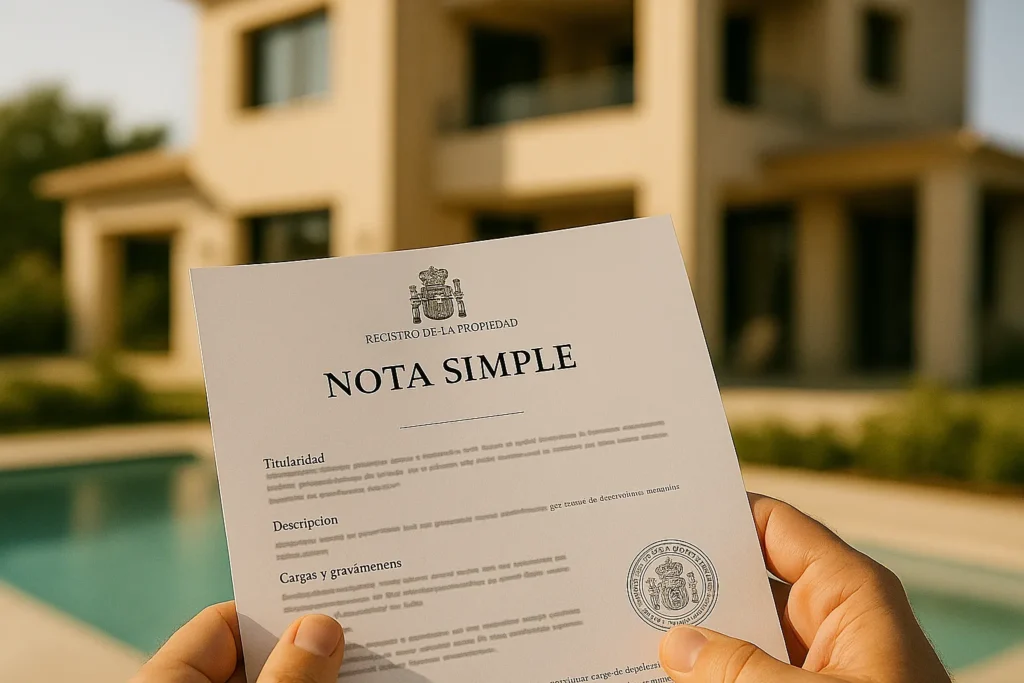
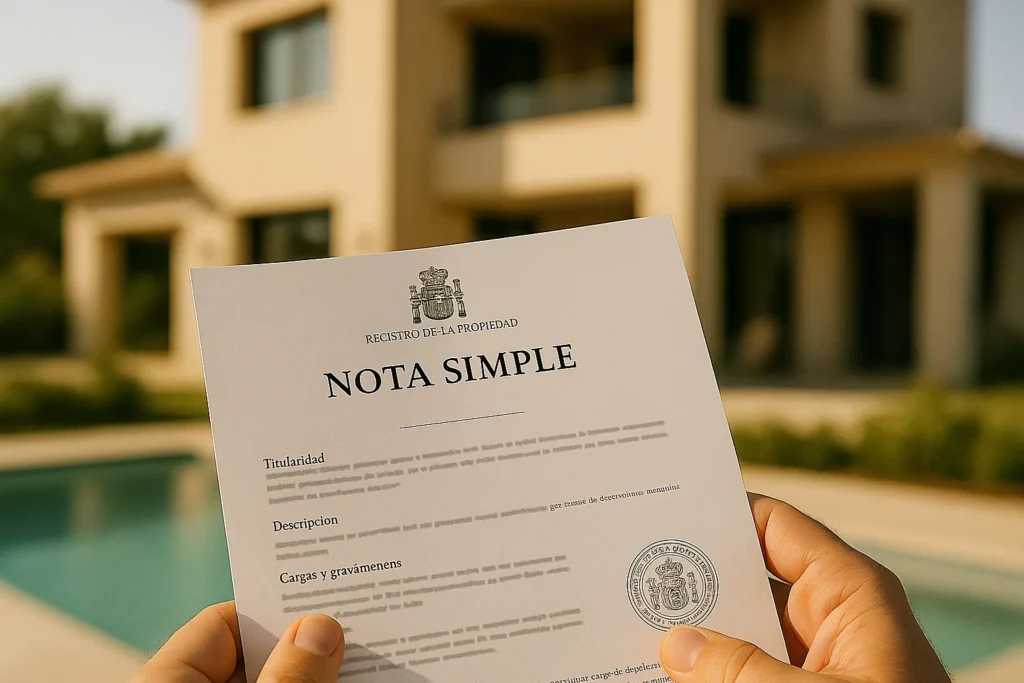
Everything You Need to Know About the Nota Simple
4-minute read
What Is the Nota Simple and Why It Matters When Buying in Spain
Buying a home in Spain is exciting, but it can also be stressful if you don’t know where to begin. Many buyers share the same experience: they fall in love with a property, only to later discover hidden debts or that it wasn’t even properly registered. The antidote to that uncertainty? The nota simple registral.
The name might sound technical, but in reality, it’s your first great ally: think of it as the property’s “ID card.” It tells you if the seller is really the owner, whether there are outstanding mortgages, liens, or any surprise that could complicate your purchase.
What Exactly Is the Nota Simple?
The nota simple is a document issued by the Spanish Land Registry (Registro de la Propiedad) that answers three essential questions:
- What debts or limitations exist? Mortgages, liens, usufructs, and tax liabilities.
- Who owns the property? It lists the owners and their respective shares
- What are you actually buying? A detailed description of the property: size, use, and location.
How to Request It (and Who Usually Does)
Where to get it:
- Online: through the official portal of the Colegio de Registradores (Spanish Land Registry), payable by card, from around €10. Often delivered instantly as a PDF with a secure verification code.
- In person: at the relevant Land Registry office, usually delivered within 24–72 hours.
The good news is that you don’t need the seller’s permission to request it: any potential buyer can apply by stating a legitimate interest. In practice the buyer, their lawyer, or their agency usually requests it directly to avoid relying on outdated copies from the seller.
How to Read It Without Getting Lost in Legal Jargon
- Ownership: check that the name matches the seller. If there are multiple owners, all signatures will be needed.
- Description: compare the size and use with what you saw in person. If they don’t match, there may be unregistered extensions.
- Charges: mortgages, liens, or usufructs don’t necessarily stop a purchase, but they must be resolved before signing.
- Tax annotations: sometimes you’ll see a “tax liability” if the property was recently transferred. That requires confirmation from your advisor.
Golden rule: nothing you don’t want to inherit should remain registered when you sign.
Common Mistakes Buyers Make (and How to Avoid Them)
- Relying on an old copy and later discovering a lien.
- Failing to cross-check data with the cadastre and stumbling upon illegal extensions.
- Trusting the seller’s word that “everything’s fine”… until the bank refused to grant a mortgage.
Paramount Tip: Never sign anything without an independent lawyer reviewing all the paperwork.
Final Step: Don’t Rely Only on the Paper
Requesting the nota simple is easy. The real challenge is interpreting it and deciding what to do with what you find. Should the mortgage be cancelled before signing? Does a discrepancy in square meters require regularization at the town hall? Could a usufruct complicate the use of the property?
This is where a legal team makes all the difference. Ideally, the nota simple should be cross-checked with the land registry, the legal team should review urban planning licenses, and a cancellation plan for existing charges should be prepared—so you can arrive at the notary’s office with complete peace of mind.

By Jose Molina
Managing Director of Paramount Homes – Lawyer
Want to buy a home?
Contact us today and discover how to make your dream of owning a property in Spain come true—without the stress.
Keep exploring!
Mortgages for Non-Residents in Spain: Options and Key Steps
Mortgages for Non-Residents in Spain 4-minute read Options and Key Steps Buying a property in Spain as a foreigner is completely possible—even if you’re not a resident. However,…

Everything You Need to Know About the Nota Simple
Energy Certificate in Spain: The Real Impact on Your Bills and Property Value
Community Statutes in Spain: What You Must Review

The Real Costs of Buying a Property on the Costa del Sol

The Ultimate Guide to Buying a Home in Spain as a Foreigner